 Signal amplifier

Valve operation
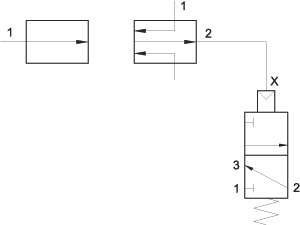
The signal amplifier is a 3/2 way poppet valve, normally closed, which transforms a low pressure signal into a signal with pressure from 2 to 8 bar. The air consumption of the amplifier itself, in the non actuated position, is very low.
The amplifier must be connected with a sender sensor and a receiver sensor. Air must be NON?lubricated. The inlet pressure of sender sensor must be between 0.3 and 2 bar; the inlet pressure of receiver sensor must be between 0.1 and 0.6 bar. The air flow from the sender sensor blocks the free flow which comes out from the receiver sensor. In this way a static pressure is created at the exit port of the receiver sensor. This pressure goes to actuate the signal amplifier. When something interrupts the air flow between the two sensors, this actuating signal is stopped.
The inlet pressure of the sensors must be proportionally changed when the inlet pressure of the signal amplifier changes.
The inlet pressure of the sender sensor must be higher than the inlet pressure of the receiver sensor.
technical data
- Ports: thread G1/8"
- Temperature range: max +60°C
- Working pressure of the ampilifier: 2 ... 8 bar
- Actuating pressure of the ampilifier: 0.03 ... 0.6 bar
- Inlet pressure of the sender pressure: 0.3 ... 2 bar
- Inlet pressure of the receiver pressure: 0.1 ... 0.6 bar
- Fluid: 50µ filtered but NON lubricated air
Materials
- Body: aluminium 11S
- Seals: NBR
- Springs: INOX
- Internal parts: brass OT58
10.042.4
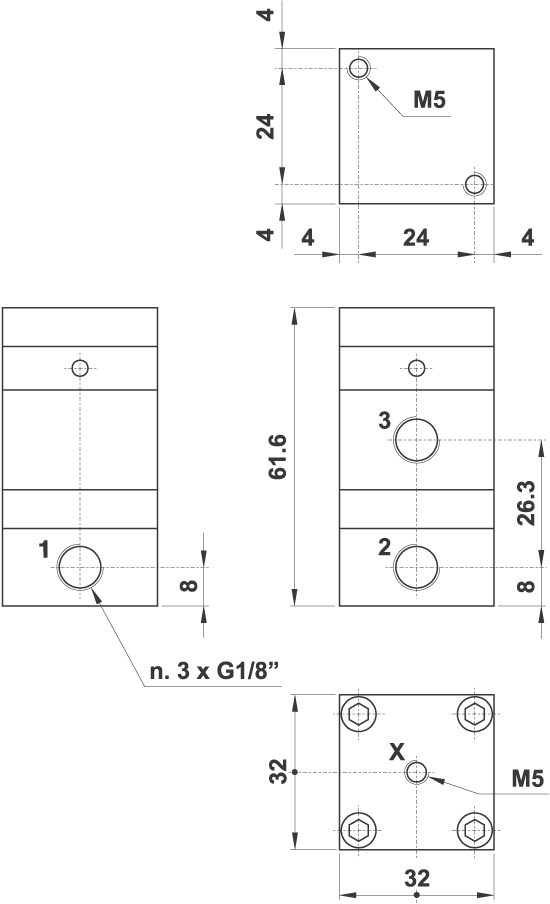
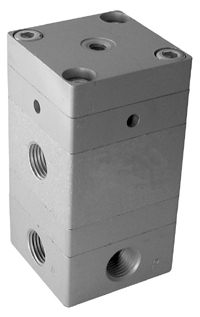
10.043.4
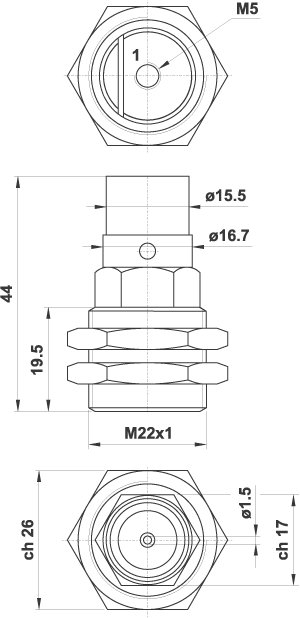
sender sensor
|
10.044.4
receiver sensor
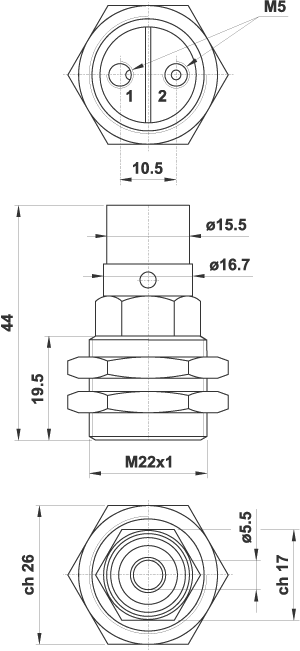
|
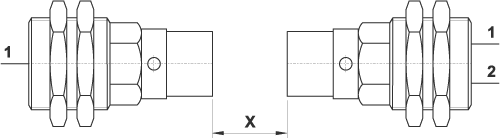
X: min 30 mm; max 80 mm |
previous page